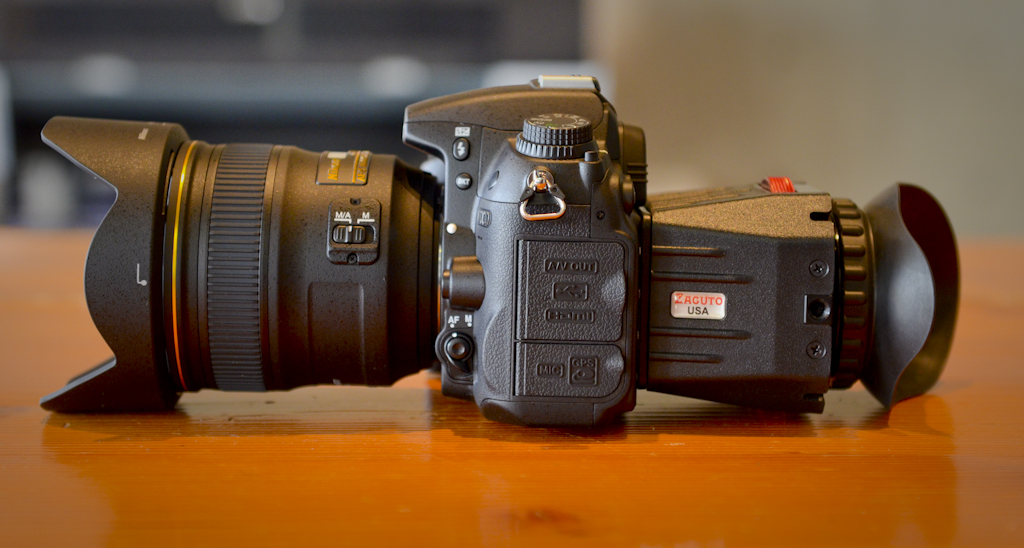
Our digital cinema guru, Erik, wanted to take a minute to chat gear with you. This is his second guest post, so please give him another warm welcome… This post is another installment of a series that our staff is doing about the gear that we consider essential for our work…the stuff we don’t leave home without.
When shooting behind the scenes videos and even some of our commercial work, we shoot with HDSLRs whenever it’s the right tool for the job. They’re lightweight and quick and produce amazing visuals, but they’re first and foremost still cameras, so they require a few extra accessories to make them function more like a cinema camera. It’s those accessories that I’ll be blogging about, beginning today with the simple but crucial challenge of keeping your footage in focus. For that I use the Zacuto Z-Finder.
On larger film/video sets there’s a small team of camera assistants dedicated to maintaining and combatting the shallow depth of field you get when shooting on large formats (35mm, RED cameras, etc). Now we have that same depth of field in easily affordable and accessible HDSLR’s, except most of us don’t have the means of bringing along a camera assistant to measure and mark focus points on our lens. There are a lot of options out there to keep your video sharp, from monitors, to follow focus systems, to my personal favorite; loupes. I’ve been using the Zacuto Z-Finder since the day I picked up an HDSLR, and I never step onto set without it.
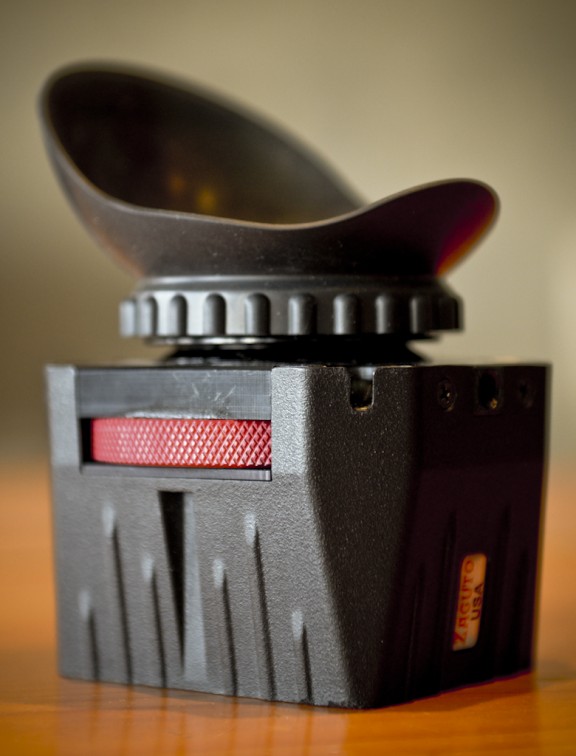
This thing is brilliant, and dead simple. It’s essentially a magnifying glass with an eyepiece, but seriously, the first time I popped it on the back of my camera it was like the LCD was transformed into a movie theater screen. It’s that detailed.
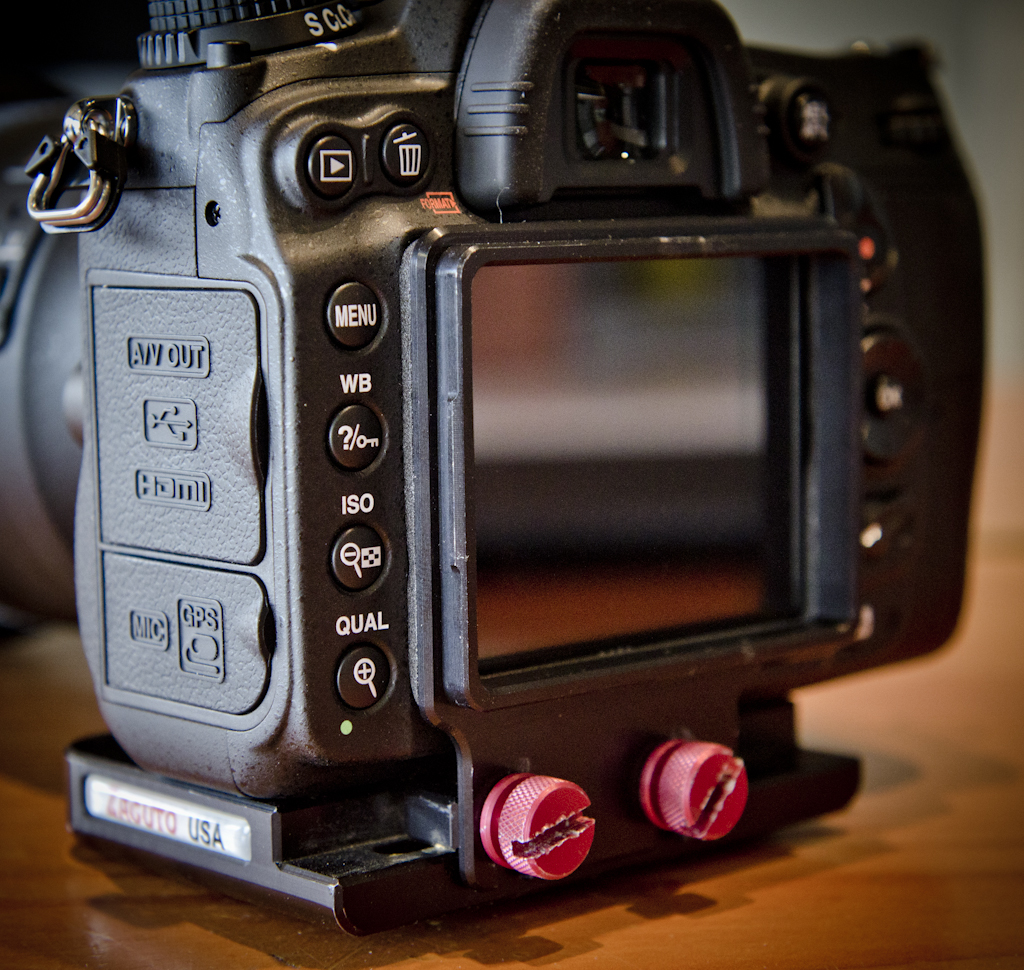
Zacuto offers up 2 ways of mounting the Z-Finder to your camera. The first is to stick a mounting frame to the border of the LCD. It’s a semi permanent fixture, you can peel it off of the camera when you don’t want it on there anymore, but then that frame is pretty much shot. The other option is Zacuto’s Gorilla Plate. You mount the plate to the bottom of the camera, and then you attach the appropriate mounting frame (depending on what camera you’re using) to the Gorilla Plate. That setup time is a bit of a setback for us as we usually bring a lot of cameras to our shoots and we work very quickly, so just pasting a sticky mounting plate to each camera is our preference.
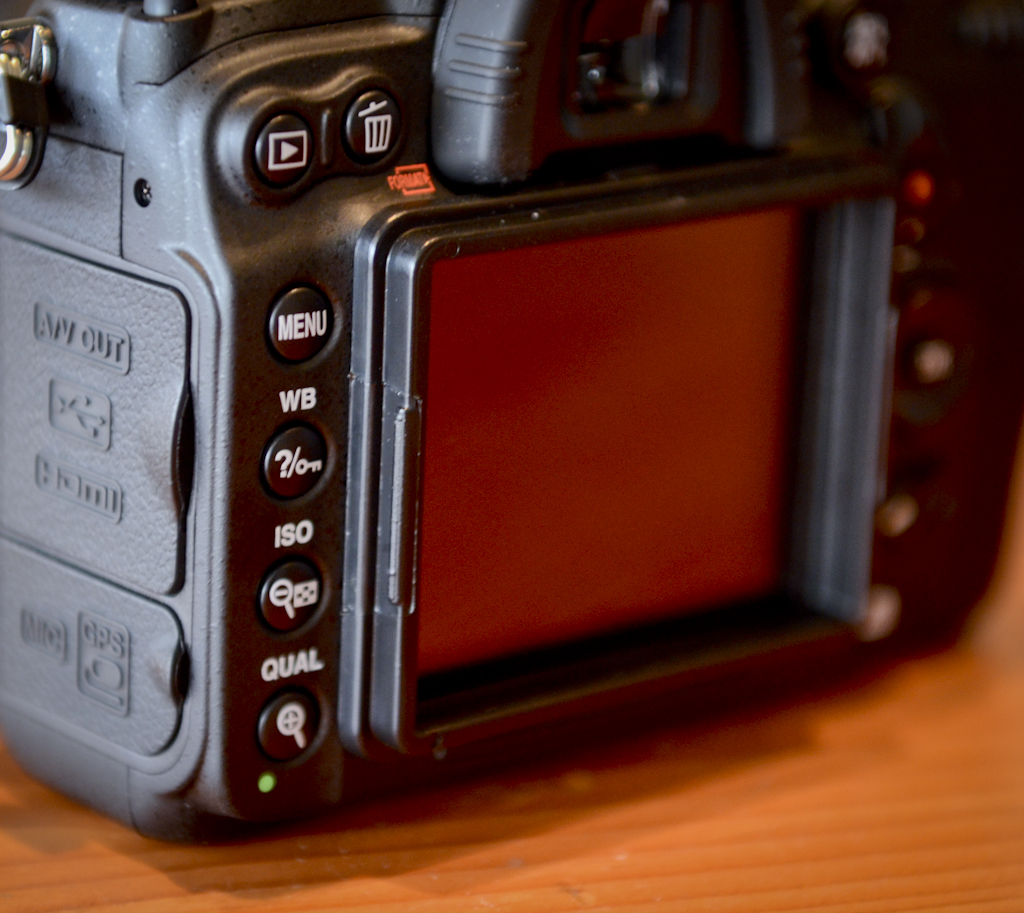
The Z-Finder has a price tag of around $375 on B&H Photo (that price includes the Gorilla Plate), which I know may sound expensive, but when it comes to risking whether or not your footage is consistently in focus, the cost is worth it.
To see the Z-Finder and a whole bunch of other badass camera toys in action, check out our Camera’s at Risk video:
One last note…. When your Z-Finder is mounted to your camera, DO NOT leave the eyepiece pointing towards the sun for any extended period of time. It’s a magnifying glass with it’s focal point set perfectly to your LCD screen, and it will burn it. I learned that lesson the hard way when I nearly put a hole in the LCD of a Nikon D3s. Yikes.
- Erik Hecht


I’ve never gotten a chance to use a Z-Finder, but I do use a (much cheaper) LCDVF. I’m at the point now where I almost never go anywhere without throwing it in my bag, even if I’m not planning on shooting video.
Thanks for the post Erik. I’ve just recently been looking at solutions for shooting DSLR videos. This little accessory looks like a helpful one.
I agree, its absolutely fantastic! We love the sticky frame too as it works better for our Steadicam rig.
Cool…I’m renting one tomorrow @ Glazers.
Great post!
If you have tips for dealing with audio when shooting with nikon D7000, I will be please.
Rode VideoMic? Use headset?
Thank’s!
Hey Kevin, good point. My next gear post will most like be about the Rode Videomic. I love that thing.
Hi
i just wonder you said that you use the Nikon d7000 for commercial work sometimes when it fits, why you choose that particular Nikon over the D3s for example is it the 1080 ? do you think that this products will fit a big part of your need ?
Thnaks a lot
Morgan, yeah, the 1080p capability of the D7000 is a big selling point. Also that it shoots in h.264 instead of motion jpegs like the D3s. The D3s is great because of the full frame sensor, but we can afford to have a lot more D7000′s in our kits because of the price difference.
Ya, the first time I looked through one of these it blew my mind . The clarity is nuts. They are expensive but worth it. good post
Chris – chrisbernardphotography.com
Hey! Great post Eric. A question: will this fit a Canon 7D?
Yep, any camera with a 3″ LCD
What kind of camera support systems do you use? I saw the recognized the SteadyCam Merlin, but what is being used around 1:25 in the video? Anything else you’d suggest looking into?
Thanks.
Hey Justin, that rig I’m using in the video is something I picked up at a 2nd hand camera shop here in Seattle. I found something that looks like the same thing (though it’s not the same brand) on amazon: http://amzn.to/eFneZ2
As for other support systems, I think the 3rd post that I’ll do in this series will be about the different shoulder mounts that we use, so keep an eye out for that.
Although expensive, but the photos it churns out is awesome.
Hi Erik,
Thanks for the post, some insights about the focus issues I had while shooting video. I got one question about the camera mounters ? as in what do you guys use to put/mount camera while hand-holding it, when not on a crane or on tripod ?
Thanks in advance!
Saneesh
I’ll preface this by saying I don’t do a lot of cinematography and am more of just a gear nut, but I have used with a z-finder and talked with one of their reps before. One of the things I hadn’t really thought about was the fact that when used with the gorilla plate and pressed firmly to your eye, the z-finder actually stabilizes the camera (which is something a diy won’t do). If you use this in conjunction with a follow focus / shoulder brace, it makes for a much more stable camera.
I totally agree Jon (and wish I had mentioned that in my post). If we’re really running and gunning, I’ll often times ditch a shoulder mount all together and just use the Z-Finder pressed against my face as my only stabilization. It gets uncomfortable after a while, but it’s great for quick takes.
erik’s face is stable…
Great post Eric. I just picked up the Z-Finder 3x, I was amazed by the stability that it added just by itself when pressed against my face. I did however find it hard to tell if my subjects were in focus in wider shots. I think it may just take some getting used to. It also seems to look better when using on the 5DM2 in comparison to the T2i, the refresh rate of the LCD screens might be different? With the T2i I noticed a lot more strobing action.
I completely agree. Hard to tell if the shots are in focus.
The other thing is that it is (or at least I find it to be) quite difficult to keep only one eye open, especially when a single take is over seven minutes long.
When the eye not being used is open it becomes difficult to gauge focus, and so, I’d tape my left eye shut so I could properly use this thing.
Looks like a nice piece of equipment to me
Thanks for sharing Erik, I’m looking forward to the next part of the serie
Hi Chase, pls what are your thoughts concerning HOODMAN CF & SD RAW cards?
Thanks for the post, Erik. Do you prefer the 2.5x version over the 3x version and why?
I prefer the 2.5x. The 3x magnifies the image a little too much so you can’t really see the whole image without moving your eye around.
I might want to get one of these now…Thanks for sharing. : )
So, does the LCD show the real depth-of-field? In other words, if you are using a lens with extremely shallow depth-of-field (50 1.2 or some such), will it be represented on the LCD? The stock viewfinders in modern SLRs do not show accurate depth-of-field beyond f/2.8 or f/2, which is obviously different from the LCD, but I was still wondering.
Yep, what you see is what you get with the LCD, so depth of field is accurate.
Not having a video-capable SLR, that was something I wondered. I usually am shooting old manual focus primes and love my specialized focusing screen which allows me to see real depth-of-field. I am glad to hear the LCD keep that accurate. Thanks for the answer. The Z-Finder is probably quite a bit cheaper (and smaller) than using an external display.
Hi Erik,
What lens do you recommend to shoot video with on the D7000? I shoot at clubs photographing people as well as the DJs in low light. Though I know the D7000 has a 1.5 crop sensor and a 50 f/1.4 I feel wouldn’t cut it.
It’s spendy, but I love the 24mm f/1.4G that we used extensively on the Benevolent Mischief video: http://bit.ly/gWCtVK
Great information thanks alot ill be back for more