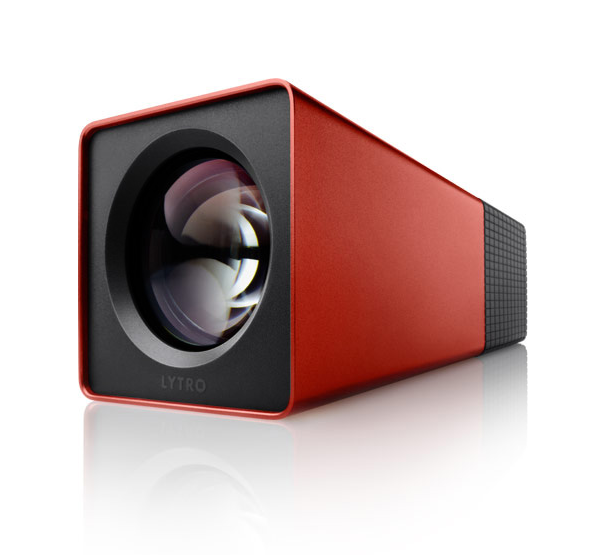
Been tons of chatter online about the Lytro camera the last few weeks. In case you’ve been living under a rock or too busy to notice, then you’ll be happy to know that the new Lytro camera allows you to select focus AFTER you shoot the photograph. AMAZING technology developed at Stanford by Ren Ng. Just like you can change the white balance after capture when shooting RAW, well now you can put those striking blue eyes of your model in focus later.
Consider that with the technology of a camera like the RED Epic – shooting a 5,000 pixel wide image at 96 frames per second. You can aim that sucker at a scene and shoot 1000 14 megapixel still images in 10 seconds. No more need to catch ‘the decisive moment’!
Combine these two technologies? Whew! Now you’ve really got something.
Unless… your pictures have no focus. If you think that you’re photos are going to be better in the future because you don’t have to pick the moment or focus on your subject, you’re entirely wrong. These technologies are truly amazing, revolutionary and will continue to change the face of photography as we know it.
But mark my words, if you’re goal is to get your work to stand out from the crowd (as good art does), then you’ll need to focus all the more.
Focus on subject.
Focus on content.
Focus on meaning.
Focus on artistic vision…
…because these are all the tools that computers can’t help you with and these are the only ways from here on out that you’re going to be able to make a mark.
Focus on that.
[and don't hate it, celebrate it, cause it's all you've got.]


You inspire me Chase.
Agreed!
So well put. You do inspire, Chase.
My thoughts exactly…
I guess I’m late to the party on this, but wanted to add my two cents.
While these things are amazing feats of new technology indeed, as you hinted at, the photographer will still need to understand composition, timing, and numerous other elements that these newer technologies will never be able to compensate for.
Well, since RED are, in fact, working on multiple-focus and depth-mapping features, we may well have this technology within the next decade. But well put; since capturing the decisive moment and focusing/focus-pulling (and even lighting, potentially, with depth-mapping) will no longer be a part of the cinephotographer’s practical arsenal, that leaves the more ephemeral, artistic decisions to be the differentiator.
In a way, this technology may well be a great leap forward in art- to stand above the rest, you will no longer be able to merely rest on your technical laurels. You’ll have to actually be SAYING or SHOWING something. We’ll be able to clearly see who’s great and who’s not because the technology will be “technically levelling” to all comers.
My concern with technology like this, is the impact it will have on the next generation. Hard work will cease to exist and everything can be fixed with the push of a button. That idea is already spreading and I don’t like it.
I admire your ability to celebrate technology like this ^^ for I think its cool but I frown upon it due to my personal pride in performing the hard work.
None the less, it is a great piece of technology and I fully agree with your statement on focus.
Andrew Vanasse
This is an interesting argument and one that is put forth fairly often in every kind of industry where technology plays a role. As I get older (I’m 38) I catch myself thinking this way a lot. Something about it rankles me though. I guess I feel at the end of the day that it really does take a human being to create something with beauty. We can get in trouble real fast here trying to define beauty. I’ll leave that to an Art School undergraduate debate, instead
But for me, a big part of beauty is the connection it creates between viewer and crafter or with the subject. While images that are well executed from a technical stand-point do hold some value to me, I often find my own favorite images are those with imperfections. Indeed, we all often compose with selective focus, cropping, exposure and more to edit the content of our images. This job must still be done by a human being. If computers reach a stage where they are able to make these decisions then an evolution will have taken place that I think only a sci-fi writer could partially imagine.
You’re argument was that the younger generation will lack the appreciation for this. I disagree. For a time, people will rely on the technology but eventually this path grows boring and a balancing will occur where once again, thought, effort, and insight will be valued because that’s what it will take to stand out.
The commodification of vision is not something that I can really conceive of.
I like you’re argument and I hope it does balance itself out. I still have a fear of laziness in myself and society but I have even more faith in the human condition.
What you’re saying has probably been said about every single advancement in photography though. “Autofocus? ugh, that takes the work out of it.” “Auto exposure? What about the hard work it takes to figure it out yourself?” Digital? What ever happened to setting up a darkroom and developing yourself? Adjust whitebalance after capture? What about putting the work into deciding what is the proper filter to use.
My point is, yeah, it’s going to take some work out of it. But so has every advance since the dawn of photography. Like everything else, it’s a tool and will find it’s place. I don’t think it’s going to make everybody lazy when it comes to photography though. Heck the really lazy ones will prefer a normal camera with autofocus so they don’t have to fiddle with the images before uploading to Facebook.
I can see this technology having the greatest impact on video though. Allows for saving time, greater artistic control, and lessening the need for reshoots.
Just my $0.02 though, take it for what its worth.
I was actually talking about the bigger picture, which involves every industry and type of work out there. But I do agree there are benefits from it.
I agree … I’m working to become a photographer not a digital artist. I know there is post work that has to be done but I was taught and firmly believe in getting it as right as possible in the camera and not the computer.
“My concern with technology like this, is the impact it will have on the next generation. Hard work will cease to exist and everything can be fixed with the push of a button. That idea is already spreading and I don’t like it.”
painters used to say the same, back in the XIX century…
no stress…
Yup, that’s what the kodak film junkies said of the digital camera last time…..
” If you think that you’re photos are going to be better in” Your photos
It’s funny you mentioned combining RED and Lytro.
Washington University is doing research on training computers to choose the best Candid photograph out of a video
http://grail.cs.washington.edu/projects/candid_video_portraits/
Now imagine the technologies of Lytro, RED and this Auto-Candid photography coming together in one camera, all you need is a Roomba and you can start a Wedding Photojournalism business
The only thing that gadgets like these do, is put cameras in the hands of people who ordinarily would never think of having one. The ‘net will flood with millions more of mediocre images, taken by people who have no business taking and posting pictures. I’m all for advancing technology and own a new model DSLR. But, I believe that it takes years to learn to “see” the final image in your mind’s eye before you even leave the house. I really try to encourage people to pick up a camera to capture the world around them. But I emphasize how important it is to “see.”
I’m sure when you were first beginning you were probably one of those with mediocre images. How would you have liked it if someone said you had no business taking pictures because you sucked?
Either I’ve entirely missed your point or you’re speaking shit.
This is the SAME problem as using the GigaPan technology… The CUSTOMER picks the focus or the frame of the photo, not the photographer…
This is a new technology not a new snapshot, letting your customer or viewer pick the focus or crop is WONDERFUL and interactive! To compare the Lytro or the GigaPan to a Red is like comparing Apples to Orangoutangs!
True that. It’s all about the why, not the how. The hows come and go, but the whys are forever.
Well put Chase. I love the merits of the technology and I think while it may give you another tool in your arsenal for perfecting an image, it doesn’t affect the tool between your ears.
Auto focus is nothing new. This just gives the user the power to have control in post production. I don’t think anyone is saying that you should not think.
I like the Lytro cam and hope it will be soon available in europe. It’s no replacement for professional cam but as a gimmick i think the lightfieldcam will be great! greets Florian
Chase, so true. Actually when you think about it, you could just point a camera towards where you think something interesting could happen, and then afterwards pick the shots you like. However, the problem is, this will be an incredibly time consuming task. You’ll need to go over every single frame to see if something interesting is in the picture, then also determine where you want the focus to be. In the end, it’s less work and, most importantly, way more fun to just be out and looking for interesting scenes to capture the way you envision them at the moment.
Actually, Bram, that’s exactly what I thought right away. Some of the most amazing work is still being done on film. Why? Because it actually takes thought and care.
More is not better. More is just more. And usually it’s worse, because it devalues the real art, skill and craft of making something important and lasting.
In the end you have to embrace change for what it is, and when an art inevitably becomes a commodity to be manufactured basically for free, you look for things in life that still cannot be replicated by a monkey pressing a button. You look for scarcity.
I see the opportunity to use this technology to help you get what you want in focus, but if you don’t already know what to put in focus when you take the picture, I don’t think the picture is worth taking. Or maybe it will allow for more creative post production!?
The camera looks kind of simple and cool, would be nice to get away from the square shape for ones though. I agree Scott, soo not orangutangish, more of an Apple product.
Chase, I would encourage you to proofread your posts for grammatical errors.
To all others, consider this camera in its current state no more than a novelty. It won’t have supreme image quality, nor with it be anything close to what digital SLRs have managed to come up with. Yes it will have the ability to focus on different points after-the-fact, but like this and every other technology that has cropped up, they are just tools. This isn’t a game-changer at all. Serious photographers needn’t feel threatened, amateur photographers needn’t be excited.
Just as Steve Jobs said people will choose with their wallets what works and what doesn’t, if ‘art’ is what you are after in your photography, then continue to do what you are doing to the best of your ability, and enjoy the subtle perks of technology along the way.
Well said Chase.
Lytro looks like a fun camera (and beautifully designed & marketed), but that’s about it.
I don’t understand the tech involved, but much of the language & descriptions of how this works on their web pages doesn’t add up for me.
Looks to me like a detailed hyperfocal type image capture, with ‘focus’ applied by softening the ‘unfocussed’ areas.
But I could be wrong
Anyways, a nicely designed fun camera.
I couldn’t agree more. It’s fascinating tech, and there’s certainly an artistic use for it, but not necessarily useful for all art. I went into some depth on this in a post about focus in motion pictures:
http://www.candlerblog.com/2011/10/23/lytro-camera-could-change-the-purpose-of-focus-but-why/
@ chase – Ironic, I just got a tattoo of a focus symbol on my inner wrist so I don’t forget.
@steven – Not everyone shares the same intent with image taking. Where you want to “see”, others want to define a moment or remember something funny. The shift in technology is the ability to easily share images. You probably have 3K family photos stuffed in a box somewhere. Now you can share everything with everyone, so why not do it? Technology has allowed me to be aware of other people’s work and get better myself. I have a nice DSLR which I learn more about it daily. Most of my images come from my iphone which I can use to share with people, or to put it another way, I happily use it to flood the ‘net with mediocrity. There’s room for everyone’s point of view out there.
Should really try it before you write about why you think something won’t work.
For art, I wouldn’t know. Surely it would have to be special to stand out.
My challenge, for which the Lytro is PERFECT for me, is that I miss the damn moment all the time (of, for example, my kids in an action shot), always due to focus and/or timing (due to focusing). Sure, I have a $500 camera now – not a $3000+. But lugging something big/expensive (which might help) around will add another amount of time to set up for ‘the moment.’
This thing (Lytro) is shutter-fast, focus-FIXABLE (to which I can render said 2d-perfect shot from), and small enough to have ready at any time.
My issue is not art. It is time to capture. For me, this is an easy answer.
Amen to everything you just said!
Isn’t this kind of technology only going to force us to spend more time sat behind a computer and not out shooting? I adore photography, finding, waiting and finally capturing that split second. I dislike, greatly dislike, spending hours sat in front of a monitor. I want to shoot, and then shoot some more!
That said, incredibly technology, and something I’ll definitely be fascinated with.
Like anything else, the Lytro camera is a tool. Like all other tools (color film, auto focus, digital sensor, numerous metering systems, the list goes on and on) it has its uses and its limitations. Every new tool starts as a gimmick. Those that last have shown that they provide something new. In the end, they are all just new things to add to the list of skills, tools and tricks that we can use to achieve whatever result we are after. What Chase is saying is true, and it goes for all other technological advancements past and future. I do not think he’s trying to downplay or undermine the Lytro from a photographic or technological standpoint, but rather that there is more to photography than the equipment that is used. Indeed, the equipment makes up almost none of it.
this is exactly what drives me day in and day out. the realization that technology can only take us so far….what is in my chest, and/or between my ears that’s pushing me and telling my finger when to press the shutter will always overcome what geniuses in their laboratories concoct.
I’m buying the darn thing
It is just another “dummy” mode that will crop up on a camera that I won’t use but my mom will love.
Well said sir
I understand where you’re coming from
Very interesting piece of technology, not ready for the public yet I think, it’s just not there. And definitely not for the real photographers I think, focus is something you think about thoroughly, it’s not always as obvious. But definitely very interesting
Completely agree! Roughly the arguments I gave my friends when they saw the prototype and thought from now on everyone could take great photos.
Is this becoming lazy photography? Or is this how artists depicted photographers when photography came along?
Technology will always be bringing out ‘improvements’ to the way we do things. While I won’t be going out to buy one, purely because I love the technical aspects of shooting, I won’t be making a fuss over hipsters who want to fork out $399-499 for this, err.. contraption.
i heard the guy interviewed on NPR radio (i’m a nerd) the other day. i immediately googled this thing as soon as i got home. after messing around with photos for about two minutes, i decided that although an awesome technological breakthrough, not sure how much it will catch on. i could be wrong.
Chase, very cool technology, but I’m wondering when we will see this in professional equipment producing professional results (sharpness seems to be an issue on their demo photos… at least to me). I’m sure we will see this evolve just as we’ve seen in digital sensors over the years and the prospect of what you could do artistically with this technology is pretty exciting.
These guys at MIT came up with a similar technology in 2006ish: http://groups.csail.mit.edu/graphics/CodedAperture/
And the Autofocus tech has taken so much away from us!
great technology for sure and in case you didnt get the focus right in the beginning truly a big benefit (i guess this will be amazing gear for everyone that shoots fast moving action such as sport or wildlife)
yet, even with the best gear, its still a person behind the camera who needs to take a picture/ video and capture the moment. even with the best gear, if you point the camera at the wrong side of the field you miss the goal.
i think the focus is now on us to concentrate even more on how and what we photograph as more and more can be fixed in post.
i tried the new canon eos 1d X today, as well an amazing kit, but again even with 12frames/sec and 18mp, its still the photographer taking the picture.
review of the 1d X on my blog in case you are interested http://www.mostphotography.blogspot.com
moritz
Damn straight! You tell’em Chase. Stumbled.
Wow!
A lot of this chatter sounds like my parents when we started using calculators. They told us we would never be good at math if we didn’t use that slide rule…
If this provides a tool that will let me capture a moment with less possibility of error, then great!!! I am all for better and better tools. Doesn’t mean I throw out everything in the past.
Other examples?!?!
Spell check
Cruise control
Auto focus
It goes on and on
I can one day see Lightroom incorperating “Focus point” and “Depth of Field” sliders…and that wil be both awesome and disappointing…
Just a fad, and an expensive one too. Merely just a novelty toy. You’re better off investing in a niece piece of glass…
I admire your unwavering optimism with pretty much everything you put out there Chase, including such advances in technology as this but to me this circumvents a major aspect of ‘photography’ as an art form and as such makes me a little sadder and nostalgic for what once was… When digital came along people were sceptical about it initially but they realised that it did away with time consuming darkroom processes and enabled people to make quick on-the-spot changes to images through chimping and the endless possibilities for file delivery that came with it. However the basic principles remained (focus, aperture choice etc.) and you still had to have a decent level of skill to capture an image which successfully translated what you wanted to too the viewer. Now it seems (as you mentioned) that the ‘decisive moment’ is no longer going to be very decisive… Henri will be rolling in his grave!
When/if this technology becomes well known and common place, it will cheapen the rest of the art form and there’ll always be a question mark hanging over certain images because there will be uncertainty about how the image was captured. If you found out that, for example, the amazing image of a high speed car crash that you liked was taken by someone who just snapping wildly away with one of these cameras, then later sharpened up in software, how would you feel about it (don’t raise PS, it’s different if used properly)? If you don’t mind, fantastic, but if there’s something there that makes you feel gipped, I wouldn’t blame you… I guess what I’m trying to say is that I’m a little worried as I never like to see something get watered down and ‘bettered’ when it ain’t broke in the first place… My 2 cents worth.
word.
Technology changes, but that doesn’t necessarily means that life get any easear, or less time consuming!
Before the digital era, I used to spend considerably less time on my photographs, just shoot and deliver to a pro-lab for developing!
Even if I was printing my own work, the time spent in the dark room wasn’t anything closer to the time I spend now in front of the computer! We, now, have much more control on the direction we want our work to take, but that came with a price. We had to learn new skills, computers, softwares, new computerized cameras, and more control means more time invested in post-production.
And saying that, what good is a car without a driver who does not know where to go! Technology goes as far as the person who uses it. So, no matter what, you still have to be the Focus behind your gear!
Whilst the technology is impressive, and it doesn’t remove many of the challenges in photography, I do photography as a hobby and enjoy the challenges I’ve got – focussing being one of them. The fact it looks like a torch annoys me a little too!
WELL. SAID.
Really well said! I really hate people that easily tell me “oh u must have a really good camera”… emmmm no… or that in a museum say something like “i could do that…”
hope you don’t mind:D
those kind of works, that sometimes seem merged with art, definitely need creativity and interaction in 360 degree with the environment and subjects. Only involved people find right answers, involving myself is the first move I’ll always try to play. I translated this post in Italian in my new website http://www.classecreativa.com. Linked here
Interesting technology, now we have to wait if it will evolve and maybe reach the pro market. Do you think it could reach the DSLR one day and we will choose on the computer the focus point of our picture taken at 1.4 aperture?
Somewhere, I hope not. Too much technology who does the job for the photographer isn’t a good thing.
I love that people think that these sorts of technological advances will make them better photographers, but the the truth is as the article says “you’ll need to focus all the more”
Nice. The goal of the artist is to use technology, tools, technique, etc. to communicate their vision and message. The ever advancing world of photography is both an opportunity and a challenge . I love it. It’s exciting and always keeps you pushing, evolving and creating the next level.
Moreover, it doesntesting It matter how extremely you ought to be complete with treating a quite platform, gradually you will discover an instance the places you need to want to do a number instruct care; and as a consequence influenced by your real age but also bodybuilding, therfore the inches of onetesting Is caravan it could be a awfully excessive pastime. motor movers
Great review! You actually covered some great news on your blog. I came across it by using Bing and I’ve got to admit that I already subscribed to the RSS, it’s very great
An amazing innovation to photography, but it only rids us of one of the challenges in photography: Focusing. When technology innovate itself to take different perspectives of a certain image from one angle, I’m just gonna say “Shut up and take my money!”
Save the expensive, stiff paper for the finished cartoons that will be printed or displayed in portfolios, or for using mediums like alcohol-based markers, or watercolor paint and washes of ink. Nike Zoom Kobe 5 TB Purple Yellow Black Shoes
Sorry folks, but if you read the technical papers, and understand the physics, light field technology can never be even remotely as good as a single sensor, and it will never, ever be as good, by a huge order of magnitude. It will always be a gimmick for consumer toys and useful for some specific technical applications. It’s cool, I don’t disagree, but the technology, by physical definition, requires a massive degradation of the total available image quality.
It’s all black light and fluorescent paint. The novelty will pass.
Link exchange is nothing else however it is just placing the other person’s blog link on your page at suitable place and other person will also do similar in favor of you.
I’ve been watching Lytro camera’s for sometime and as soon as they come to the uk I’ll be getting my hands on one. I agreed with your points about the photographers job is to “focus” but a very interesting technology that has potential.
It is inevitable, technology and image-making have always been connected.
Great technology but funky shape. Looks like a flashlight…
I love gadgets and this is one that really intrigues me and I would love to have a play. I don’t think I would want to own one, much more fun playing with a full frame camera and really fast prime lenses. I’m not sure if the idea will be embraced by the masses or not so time will tell.
I real happy to find this web site on bing, just what I was searching for : D too saved to fav.
Excellent publish, very informative. I wonder why the opposite specialists of this sector don’t understand this. You must continue your writing. I am confident, you have a huge readers’ base already!|What’s Going down i’m new to this, I stumbled upon this I’ve found It absolutely helpful and it has aided me out loads. I hope to give a contribution & aid different users like its helped me. Good job.
I’ve been browsing on-line greater than 3 hours today, but I never found any attention-grabbing article like yours. It is beautiful price sufficient for me. Personally, if all web owners and bloggers made good content material as you probably did, the web might be much more useful than ever before.
You already know therefore considerably on the subject of this matter, produced me in my opinion believe it from a lot of varied angles. Its like men and women are not interested except it is something to accomplish with Woman gaga! Your personal stuffs excellent. At all times deal with it up!
Thank you for this amazing post! It has long been really helpful. I wish which you will carry on posting your understanding with us.